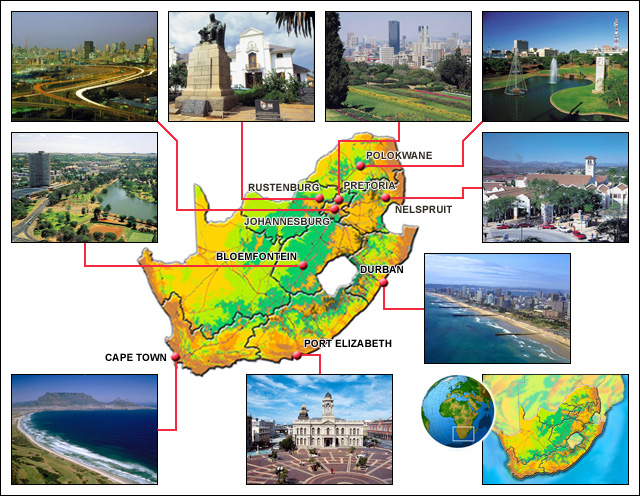
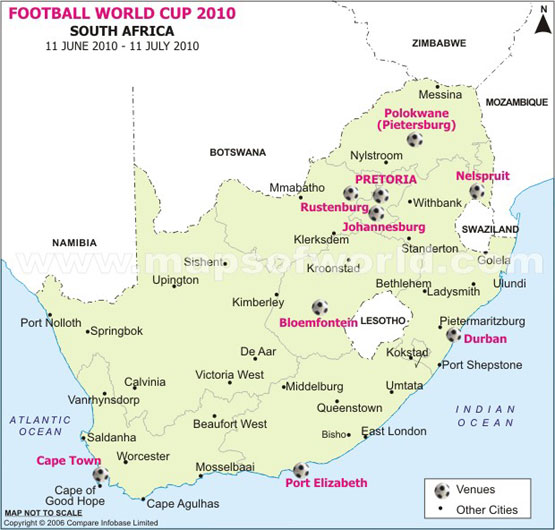
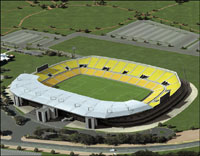
Ten stadiums will be used for the 2010 tournament (clockwise from top
left): Soccer City in Johannesburg, Gauteng; Ellis Park in
Johannesburg, Gauteng; Royal Bafokeng Stadium in Rustenburg,
North West; Peter Mokaba Stadium in Polokwane, Limpopo; Mbombela
Stadium in Nelspruit, Mpumalanga; Loftus Versveld in Pretoria,
Gauteng; King Senzangakhona Stadium in Durban, KwaZulu-Natal;
Nelson Mandela Stadium in Port Elizabeth, Eastern Cape; Greenpoint
Stadium in Cape Town, Western Cape; and Free State Stadium
in Bloemfontein, Free State.
Has South Africa previously hosted an event of this
magnitude?
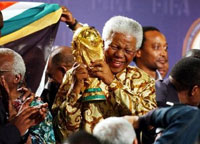
South Africa has hosted top-end international sporting events, and
since 1993 have successfully managed some of the largest -
including the 1995 Rugby, and
2003 Cricket World Cups, the Women's
Golf World Cup 2005-08, and the only street
race for the A1 GP World Cup of 2006.
The Fifa Football World Cup is however the world's biggest
single code sporting event in terms of audience, bigger than
the Olympic Games and in a class of its own.
For four weeks starting on the 9th June 2010, South Africa
will be at the centre of the world. The 2006 German World
Cup was the most extensively viewed event in the history of
television. South Africa 2010 will draw an even bigger audience.
The eyes of billions of viewers, millions of int. visitors
and the cream of the crop of world's sporting media will be
focused on South Africa and we dont aim to disappoint!
Who are hosts, Bafana Bafana?
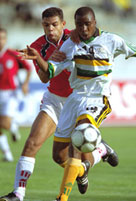
The SA football team is known as Bafana Bafana - loosely relating
- "the boys, the boys" in isiZulu. The nickname
comes from the cry of the fans that went up during the team's
triumph at the 96 African Nations Cup (also hosted in South
Africa). Since the end of the apartheid era and South Africa's
sporting isolation, Bafana Bafana have twice qualified in
1998 and 2002 for the Fifa World Cup.
What's the difference between soccer and football?
No difference, While the game is largely known as football
in Europe, in the former British colonies - including South
Africa, Australia and the US - it's called soccer.
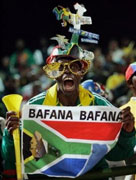 What
is a vuvuzela? What
is a vuvuzela?
Some would say it's South Africa's national musical instrument.
It's a large brightly coloured plastic trumpet, and is blown
with gusto by all fans at every football match in the country.
The sound it makes is something between the bellow of a constipated
elephant and the buzzing of a giant swarm of baritone bees,
but South Africans like it.
How will South Africa benefit from the World Cup?
It has been estimated that the Fifa World Cup will create
some 129000 jobs, contribute around R21 billion to South Africa's
GDP and generate another R7.2 billion in government taxes,
with around 350000 visitors expected to spend around R9.8
billion during the tournament.
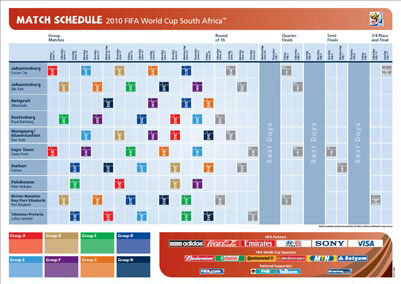
2010 Fifa World Cup matches will be held in 10 stadiums-
two in Johannesburg and one in each of the other eight host
cities. Together, the 10 stadiums will host 64 matches and
seat more than 570 000 people during the course of tournament.
Five of the 10 are existing stadiums, which are being upgraded,
with Soccer City - venue of the opening and final match -
undergoing a major upgrade. The other five stadiums are being
built from scratch.
Which cities are hosting matches?
Nine South African cities will stage the 2010 Fifa World
Cup.
Johannesburg
The economic hub of Africa, Joburg is a bustling, sprawling city
of contrasts, spread across the small but densely populated
province of Gauteng.
- Nearest airport: OR Tambo International
- World Cup stadiums: Soccer City and Ellis Park
- World Cup matches: 10 first-round (including the opening)
and two second-round matches, two quarterfinals and the final.
Cape Town
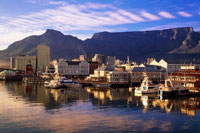
South Africa's oldest and loveliest city lies in Table Bay
on the Atlantic Ocean, in the south of the Western Cape province.
Beautiful buildings, the nearby winelands, long white beaches
and a rich
Durban
A warm subtropical place and the largest city in KwaZulu-Natal,
Durban is a major tourist destination with the busiest port
in South Africa.
- Nearest airport: Cape Town International
- World Cup stadium: Greenpoint Stadium
- World Cup matches: five first-round matches, one second-round
match, one quarterfinal, one semifinal
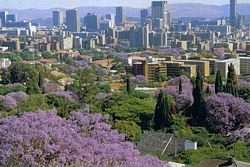 Pretoria Pretoria
Pretoria is the administrative capital of South Africa, lying
north of Johannesburg in the province of Gauteng. Over 150
years old, it is a place of grand monuments, delightful architecture
and lovely open spaces.
- Nearest airport: OR Tambo International
- World Cup stadium: Loftus Versfeld Stadium
- World Cup matches: five first-round matches, one second-round
match.
Port Elizabeth
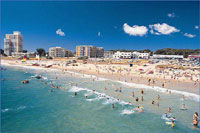
Known as the Friendly City, Port Elizabeth lies in Nelson Mandela
Bay on the windswept Wild Coast of the Eastern Cape province.
- Nearest airport: Port Elizabeth Airport
- World Cup stadium: Nelson Mandela Bay Stadium
- World Cup matches: five first-round matches, one second-round
match, one quarterfinal and the third-place playoff.
Bloemfontein
The former capital of a Boer republic and now capital of
the Free State, Bloemfontein - the name means "flower
fountain" - is a pretty city with thousands of rose bushes
and some poignant memorials.
- Nearest airport: Bloemfontein Airport
- World Cup stadium: Vodacom Park
- World Cup matches: five first-round matches, one second-round
match.
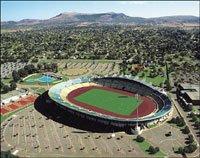 Rustenburg Rustenburg
Its tranquil Jacaranda-lined streets belie the fact that
the Rustenburg area in North West province is one of the world's
most heavily mined regions, with a wealth of platinum underground.
- Nearest airport: OR Tambo International
- World Cup stadium: Royal Bafokeng Stadium
- World Cup matches: four first-round matches, one second-round
match.
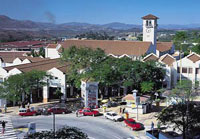
Nelspruit
The capital of Mpumalanga province lies in the fertile valley
of the Crocodile River, about 330km east of Johannesburg.
- Nearest airport: Kruger Mpumalanga International Airport
- World Cup stadium: Mbombela Stadium
- World Cup matches: five first-round matches
Polokwane
The capital of Limpopo province is ideally situated near
the border of the wildlife-rich, world-famous Kruger National
Park.
- Nearest airport: Polokwane International Airport
- World Cup stadium: Peter Mokaba Stadium
- World Cup matches: four first-round matches
|